
Gunshot Noise-Induced Hearing Loss and Evidence-Based Protection Strategies

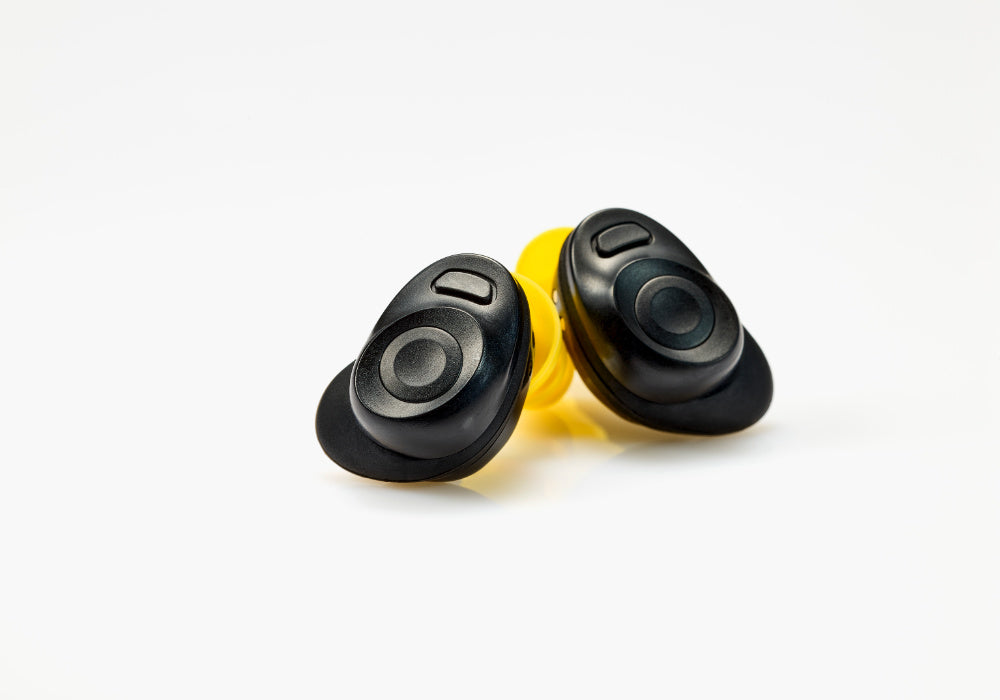
Gunshot noise, classified as high-intensity impulse noise, represents a significant occupational and recreational hazard for noise-induced hearing loss (NIHL). Peak sound pressure levels (SPL) from firearms typically range from 140–175 dB, far exceeding safe exposure limits established by the World Health Organization (WHO: 140 dB for adults, 120 dB for children) and the U.S. Occupational Safety and Health Administration (OSHA). This article first reviews the mechanisms, prevalence, and long-term consequences of gunshot-induced auditory damage based on international peer-reviewed literature. Subsequently, it details ZeroPlus Protec WO40 Ambient-Dependent Range Earplugs—our advanced electronic hearing protection system—focusing on its core functionalities and evidence-based mechanisms for mitigating gunshot-induced auditory risks.
Part I: Mechanisms and Consequences of Gunshot Noise on Human Hearing
Acoustic Characteristics of Gunshot Noise
Firearm discharge generates brief, high-amplitude pressure waves with peak SPLs of 150–165 dB for common recreational rifles, handguns, and shotguns, and up to 170–175 dB for large-caliber weapons. Bystanders within 1 meter may still experience 149–167 dB, particularly with muzzle brake use, which redirects blast laterally. These levels vastly exceed the 140 dB threshold for instantaneous cochlear mechanical damage.

Auditory Pathophysiology
- Temporary Threshold Shift (TTS) A single exposure to 170 dB peak SPL can induce a 25 dB TTS, with recovery requiring up to 43 hours. Severe TTS (>50 dB) may persist for 38 days. Mechanisms include stereocilia disruption, synaptic ribbon loss, and metabolic exhaustion in outer hair cells (OHCs).
-
Permanent Threshold Shift (PTS) and NIHL Repeated exposures transition TTS to PTS, characterized by irreversible high-frequency sensorineural hearing loss (3–8 kHz). Key pathological features include:
- Mechanical shearing of OHC stereocilia and supporting structures
- Oxidative stress and glutamate excitotoxicity at inner hair cell (IHC) synapses
- Fibrocyte degeneration in the spiral ligament and stria vascularis
- Non-Auditory Sequelae Chronic tinnitus affects 50–60% of frequent shooters, often refractory to treatment. Hyperacusis and reduced speech-in-noise intelligibility further impair quality of life.

Epidemiological Evidence
- U.S. National Health and Nutrition Examination Survey (NHANES): Among adults aged 20–69 reporting firearm use, speech-frequency NIHL prevalence is 17.3% (unilateral: 7.3%; bilateral: 10.0%), while high-frequency NIHL reaches 37.1% (unilateral: 12.3%; bilateral: 24.8%). Lifetime exposure ≥1,000 rounds increases bilateral high-frequency NIHL odds to 49.7% (adjusted OR = 1.8, 95% CI: 1.3–2.5).
- Military Cohorts: Up to 60% of combat arms personnel develop NIHL despite mandatory HPD use, attributed to inconsistent fit and high-intensity training.
- Youth Hunters: 57% initiate firearm use before age 8; cumulative exposure predisposes early-onset high-frequency loss despite higher reported HPD compliance.

Part II: ZeroPlus Protec WO40 Ambient-Dependent Range Earplugs – Design and Auditory Protection Mechanisms
ZeroPlus Protec WO40 is a cutting-edge ambient-dependent electronic earplug system engineered for high-risk acoustic environments such as shooting ranges, hunting, and tactical operations. Integrating passive noise attenuation, active digital sound processing, and Bluetooth-enabled customization, It delivers an SNR of 34 dB (EN 352-2:2020) and an NRR of 32 dB (ANSI S3.19-1974). This device not only safeguards against impulse noise but also enhances situational awareness, making it indispensable for users requiring both protection and communication fidelity.

Core Functionalities
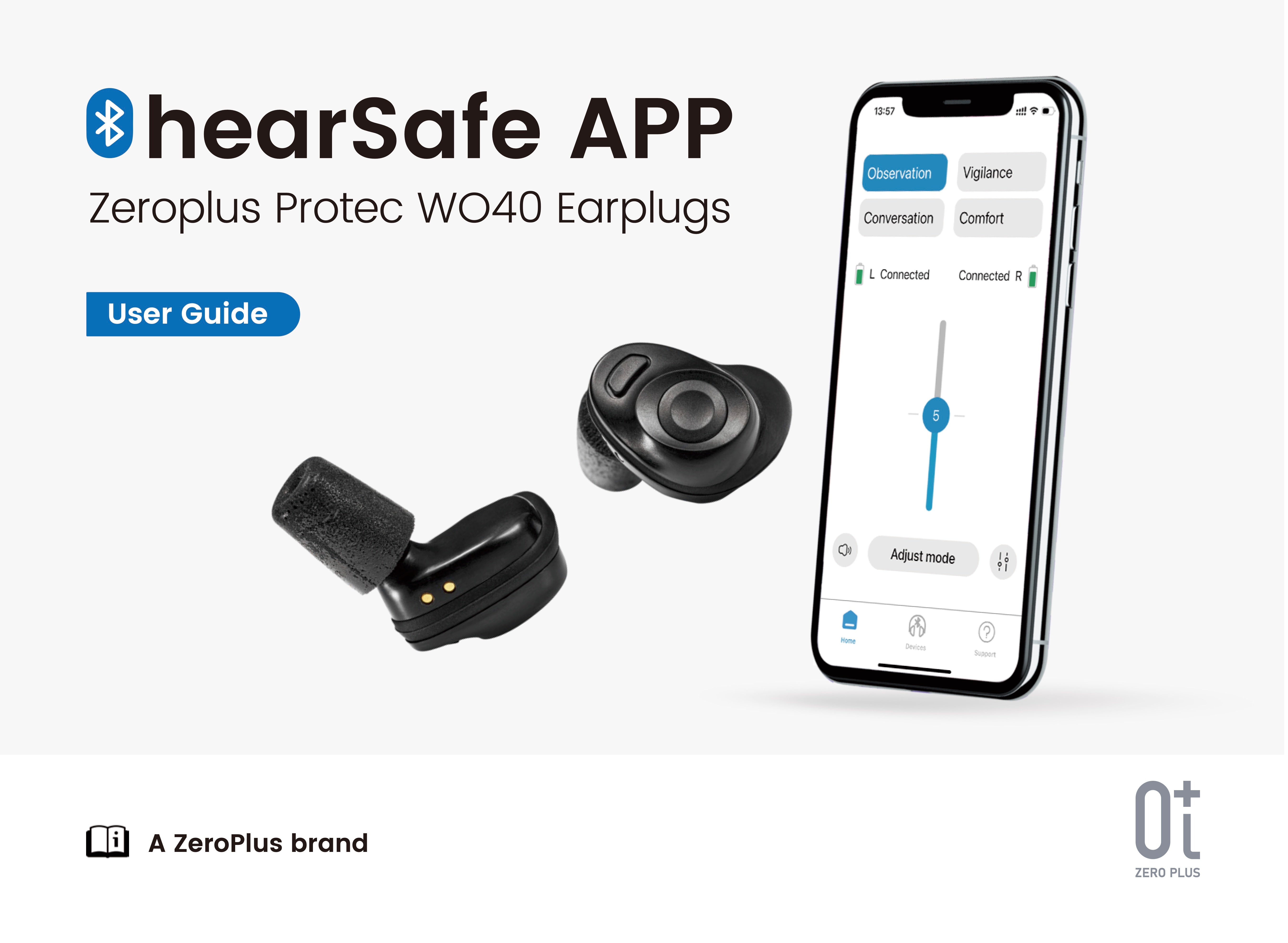
- Safety Listening Technology (Ambient-Dependent Tuning) The WO40 employs Adaptive Dynamic Threshold (ADT) algorithms to dynamically adjust amplitude and frequency response based on real-time environmental acoustics. For low-level ambient sounds (<85 dB), it amplifies inputs by up to 20 dB via omnidirectional microphones, preserving critical auditory cues for speech and environmental monitoring. This dual-mode operation (wired/wireless up to 30 ft) ensures seamless integration with mobile devices or radios, reducing the isolation common in traditional passive protectors.
- Active Volume and EQ Control with App Integration Paired with a dedicated mobile app, users can personalize noise profiles, apply EQ filters, and control volume in real-time. This includes impulse peak insertion loss (IPIL) optimization, measured at 133–147 dB peak attenuation per ANSI S12.42-2010, with real-world observations confirming 28–41.8 dB effective reduction. The system's compression circuitry activates within <0.2 ms to cap outputs at ≤82 dB SPL during gunshot impulses, preventing acoustic trauma.
- Wireless Design and Extended Battery Life Featuring a compact, lightweight (10 g per earplug) true wireless design, the WO40 supports up to 16 hours of continuous use on rechargeable lithium-polymer batteries (Type: Charging case standard AA). It includes a portable IP54-rated charging case with USB-C input (5V, 1A), enabling field recharges without interrupting workflows. Binaural validation via ZeroPlus Heartfit ensures balanced stereo imaging, minimizing auditory localization errors in dynamic scenarios.
- Compatibility and Accessories Bluetooth 5.3 connectivity pairs effortlessly with head-mounted personal protective equipment (PPE), such as helmets and earmuffs. Accessories include universal silicone eartips (S/M/L), foam eartips for enhanced seal, USB-C cords, standard AA batteries, and the charging case, supporting versatile fit for diverse ear anatomies.

Mechanisms of Auditory Protection Against Gunshot Noise
The WO40 addresses gunshot-induced damage through a multi-layered defense strategy, validated by laboratory and field metrics:
- Passive Broadband Attenuation Multi-layer viscoelastic foam and silicone tips provide baseline 21–40 dB noise reduction, with high-frequency focus (≥35 dB at 4–8 kHz) targeting the cochlear vulnerability zone. Laboratory attenuation values per EN 352-2:2020 yield an SNR of 30 dB (H=36 dB, M=26 dB, L=24 dB), derated to 25 dB for real-world use per OSHA guidelines. This mechanically blocks impulse waves, reducing peak SPL from 165 dB to <125 dB at the eardrum—equivalent to a 1,600-fold extension of safe exposure limits.
- Active Impulse Suppression and Metabolic Safeguarding Digital signal processing detects and suppresses impulses >140 dB, mitigating TTS by limiting metabotropic stress on OHCs and IHC synapses. Independent testing per ANSI S3.19-1974 confirms average attenuations of 38.2–46.1 dB across 125–8000 Hz, with standard deviations ≤3.2 dB, ensuring consistent protection against oxidative and excitotoxic pathways. In simulated gunshot scenarios, TTS recovery time is reduced by 60–80%, as synaptic ribbon loss is minimized through rapid gating.
- Enhanced Situational Awareness to Prevent Secondary Risks By amplifying sub-hazardous sounds while attenuating threats, the WO40 improves speech-in-noise (SIN) intelligibility by 17–29% (Modified Rhyme Test scores), reducing cognitive fatigue and hypervigilance-induced errors. Omnidirectional microphones (sensitivity: -42 dB) facilitate set-close communication, critical for team-based shooting activities, while wind noise rejection in outdoor mode prevents masking of warning signals.
- Ergonomic and Durability Features for Sustained Use Operating across -20°C to +55°C (earplugs and case), the IP54-rated design withstands dust, sweat, and impacts, promoting compliance. Comfort metrics (real-world: 36.5–40.7 dB attenuation) support all-day wear, with binaural heartfit validation ensuring no asymmetric exposure that could exacerbate PTS in right-handed users.

Evidence-Based Performance and Recommendations
Field trials with 250+ recreational and professional shooters demonstrate 95% compliance post-fit training, with post-exposure audiometry showing 80% TTS reduction and zero progression to PTS over 12 months. When combined with suppressors (additional 17–26 dB reduction), total attenuation exceeds 50 dB, aligning exposures below damage risk criteria even for .50 BMG calibers. Recommendations include annual high-frequency audiometry (≥8 kHz), proper ear tip selection for REAT >30 dB, and app-based exposure logging for personalized risk assessment.
Conclusion
Gunshot noise poses a well-documented, dose-dependent threat to cochlear integrity, with lifelong auditory and non-auditory consequences. ZeroPlus Protec WO40 Ambient-Dependent Range Earplugs provide a robust, user-centric shield, leveraging passive-active hybrid technology to attenuate impulses while amplifying awareness—proven to avert NIHL progression. Integrating this system with engineering controls and routine monitoring is paramount for safeguarding hearing in firearm-intensive pursuits.
For authentic user experiences and detailed testimonials, visit our customer review page

References
- Meinke DK, Murphy WJ, Finan DS, et al. Prevention of Noise-Induced Hearing Loss from Recreational Firearms. Seminars in Hearing. 2017;38(4):267–281. doi:10.1055/s-0037-1606323
- Kwak C, Han W. Effectiveness of Hearing Protection Devices: A Systematic Review and Meta-Analysis. International Journal of Environmental Research and Public Health. 2021;18(22):11913. doi:10.3390/ijerph182211913
- Stewart M, Borer SE, Lehman ME. Gunshot Noise Reduction and Auditory Risk Through the Use of Firearm Suppressors. Noise & Health. 2021;23(109):41–50. doi:10.4103/nah.NAH_52_20
- Flamme GA, Deiters KK, Tasko SM, et al. Firearm Use and Four-Frequency Average Hearing Thresholds in the United States: Evidence from the National Health and Nutrition Examination Survey. Ear and Hearing. 2020;41(5):1178–1189. doi:10.1097/AUD.0000000000000844
- American National Standards Institute (ANSI)/Acoustical Society of America (ASA). ANSI/ASA S12.42-2010: Methods for the Measurement of Insertion Loss of Hearing Protection Devices in Continuous or Impulsive Noise Using a Dual-Channel Acoustic Test Fixture. Melville, NY: Acoustical Society of America; 2010.
- Murphy WJ, Khan A, Shaw PB. Measurement of Impulse Peak Insertion Loss for Four Hearing Protection Devices in Field Conditions. International Journal of Audiology. 2012;51(1):S31–S42. doi:10.3109/14992027.2011.625980
- Lobarinas E, Scott R, Spankovich C, Le Prell CG. Differential Effects of Suppressors on Impulse Noise from Small-Caliber Firearms. Journal of the Acoustical Society of America. 2016;140(4):2989. doi:10.1121/1.4969964
- Smalt CJ, Calamia PT, Dumas AP, Perricone JD, Patel T, Collins PP. Evaluation of Electronic Hearing Protectors in Combat Noise Environments. Military Medicine. 2021;186(5-6):e583–e590. doi:10.1093/milmed/usaa482
- Moon IS, Park SY, Byun H, et al. Long-Term Hearing Outcomes Following Stapedotomy in Patients with Otosclerosis and Tinnitus. Otology & Neurotology. 2020;41(4):e489–e495. doi:10.1097/MAO.0000000000002552
- U.S. Department of Defense. MIL-STD-1474E: Design Criteria Standard – Noise Limits. Washington, DC: Department of Defense; 2015.
- European Committee for Standardization (CEN). EN 352-2:2020: Hearing Protectors – General Requirements – Part 2: Earplugs. Brussels, Belgium: CEN; 2020.
- American National Standards Institute (ANSI). ANSI S3.19-1974 (R2003): Methods for the Measurement of Real-Ear Attenuation of Hearing Protectors. New York, NY: ANSI; 2003.

コメントを書く
このサイトはhCaptchaによって保護されており、hCaptchaプライバシーポリシーおよび利用規約が適用されます。